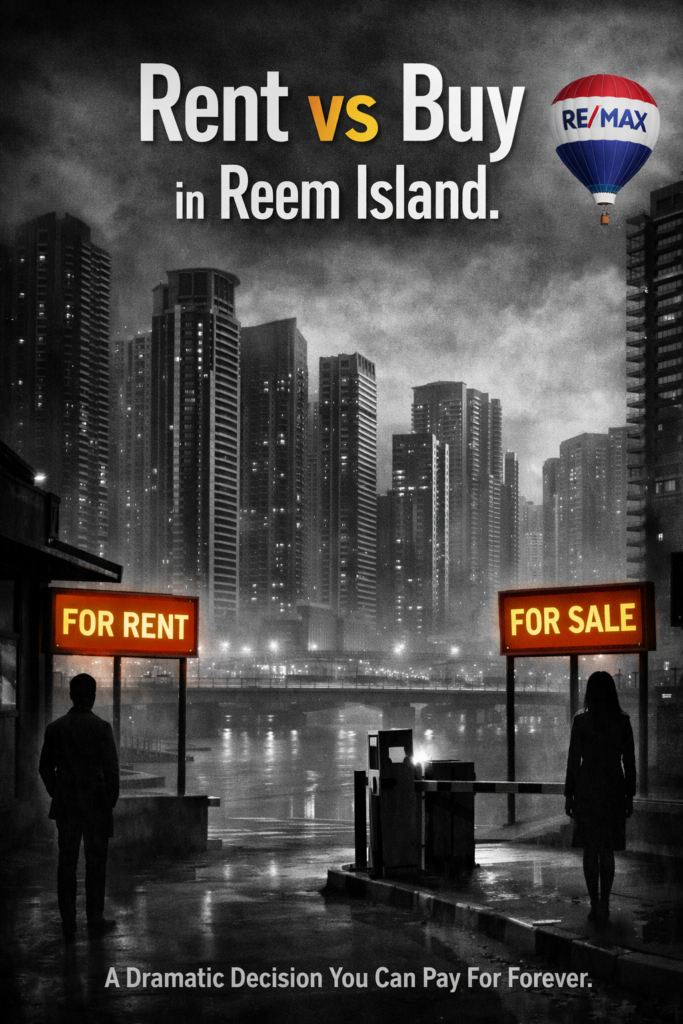
Rent vs Buy in Reem Island.
A Debate Fueled by Fear, Commitment Issues, and Excel Sheets.
Before anyone reacts, let me be clear:
this is not financial advice.
This is behavioral observation.
Every Reem Island conversation eventually reaches the same dramatic pause:
“Should I rent… or should I buy?”
Spoken as if choosing between freedom and lifelong regret.
The Case for Renting (aka Emotional Flexibility)
Renting is often framed as being “smart.”
No commitment. No responsibility. No long-term thinking required.
You pay. You live. You leave.
It feels light. Temporary. Safe.
Until:
- Rents increase
- Contracts renew at new numbers
- Moving becomes annual cardio
- And you realize flexibility mostly benefits everyone except you
Renting is not wrong.
It is just very good at hiding its long-term cost behind short-term comfort.
The Case for Buying (aka Psychological Maturity)
Buying is usually described with a sigh.
“Too much commitment.”
“What if the market changes?”
“What if I want to move?”
Interesting how long-term planning suddenly feels risky when it involves ownership.
Buying in Reem Island is not about romance.
It is about replacing rent anxiety with asset clarity.
You stop negotiating with landlords.
You start negotiating with time.
What People Rarely Admit
Most people are not choosing between rent and buy.
They are choosing between:
- Monthly certainty vs long-term accumulation
- Emotional flexibility vs financial structure
- Paying for access vs building equity
And many call hesitation “strategy.”
The Quiet Reem Island Reality
Reem Island is not a speculative playground.
It is a functioning urban district.
People live here.
Work here.
Stay here.
Which makes ownership less dramatic than people think
and renting less temporary than they pretend.
Final Thought
Renting buys you time.
Buying buys you stability.
The mistake is not choosing either.
The mistake is staying undecided while paying premium prices for the illusion of flexibility.